Categories
projects uncategorized

diaspora women

Summary:

The term diaspora women refers to women who have migrated or are descendants of those who have migrated from their country of origin to a different host country.

They often navigate complex intersections of identity, encompassing their cultural heritage, gender roles, and experiences as migrants or members of diaspora communities.

The goal of this project is to create a supportive environment that honours their rich cultural backgrounds while promoting financial and cultural empowerment, equality, and a sense of belonging in their adopted countries.

Our Mission:

In the tapestry of our diverse society, diaspora women stand as vibrant threads weaving stories of resilience, creativity, and strength. Our mission is to illuminate and amplify these voices, creating a dynamic cultural, social and economic space that celebrates the rich intersectionality of diaspora experiences among women.

Our Vision:

A world where diaspora women are recognised as pillars of strength, where their stories, cultures, and talents are not only acknowledged but embraced as essential threads in the fabric of our shared humanity.

Our Values:

  1. Intersectional Empowerment:

Acknowledge and empower diaspora women at the crossings of gender, culture, and migration, recognising the unique strengths that arise from these intersections. Advancing intersectional empowerment through financial and cultural inclusion and fostering entrepreneurial spirit to reach agency and independency.

2. Cultural Appreciation:

Encourage appreciation and understanding of diverse cultures, languages, and traditions. Fostering an environment of mutual respect and collaboration.

3. Inclusivity in Leadership:

Promote and support diaspora women in leadership roles across various sectors, ensuring their voices contribute to shaping policies, institutions, and cultural narratives.

4. Global Solidarity:

Foster connections and collaborations with diaspora women globally, recognising the universal aspects of their experiences and leveraging collective strength for positive change.

Join us in the celebration of diaspora women — where diversity is not just acknowledged but celebrated, and where the collective strength of these women becomes a source of inspiration and empowerment for generations to come.

For our SDGs: click here.
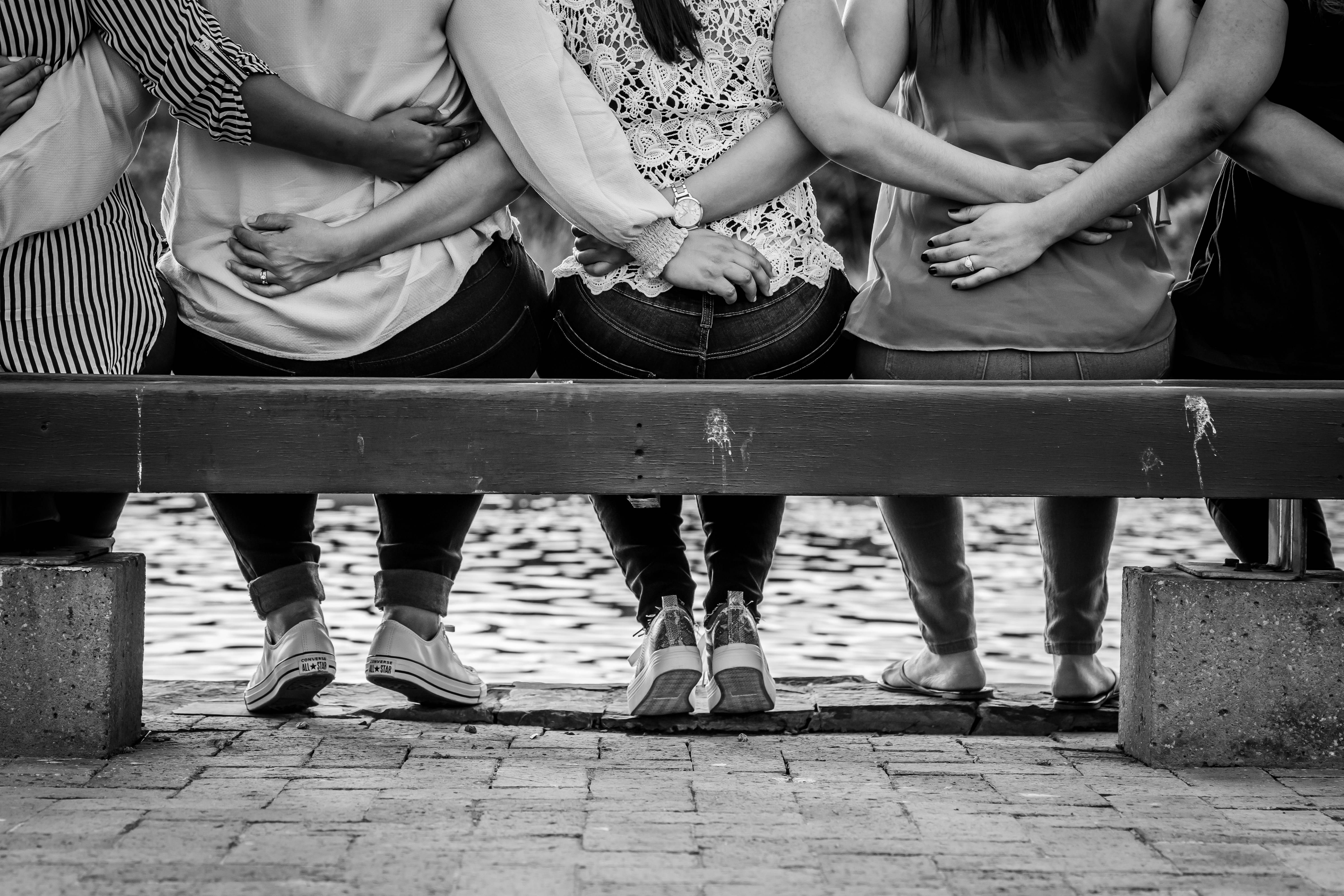
Photo by Luwadlin Bosman
Categories
about uncategorized

about

At Otherness Project, we embark on a transformative journey that transcends borders and disciplines, seamlessly blending art, science, and society.

Our mission is to design sub-projects to deliver high-quality performances, workshops, and research initiatives that not only captivate audiences but also serve as catalysts for education, individual growth, and social healing.

We are dedicated to pushing boundaries, challenging norms, and creating experiences that resonate with the complexity of our interconnected world. We believe in the transformative power of art to bridge gaps, foster understanding, and ignite the spark of curiosity that fuels both individual growth and societal progress.

We cooperate in various artistic and research environments internationally. Our partners reside in Denmark, Sweden, Germany, Greece, Cyprus, Italy, Slovenia, Hungary, Romania, the UK, Montenegro, and the spectrum is getting larger every year.

Join us on this global exploration where art becomes a powerful force for change, education becomes a journey of discovery, and society is enriched through the diverse narratives we weave together.

CONTACT: othernessproject@gmail.com

OR:

Go back

Your message has been sent

Warning
Warning
Warning
Warning.

OUR STORY:

Otherness Project was initiated as a third sector organisation in Helsingør, Denmark, in 2014, with a core group of artists and researchers residing in Eastern European and Nordic countries.

In Denmark, between 2014 and 2019, Otherness Project:

  • participated in 11 EU projects,
  • developed and disseminated among 8 partners organisations the social research-based Sideways Storytelling method,
  • developed 4 participatory performances with/for/by local audiences, using relational art, dialogical art, performing arts, installation art, gamification, art-and-science methods,
  • raised 2 million EUR for its sub-projects,
  • delegated 15 young professionals to participate pan-European exchange and training programmes,
  • was endorsed by the Danish Ministry of Culture for its excellence in socially engaged arts projects.

In the UK, between 2019 and 2023, Otherness Project continued its work as a grassroots organisation with global team members from the UK, Scotland, China, Italy, the US, Hungary, Romania, the Check Republic, and Colombia.

  • initiated a global object-storytelling project during the pandemic,
  • created a trilingual hybrid performance tackling both gender equity and the role of AI in human life,
  • was endorsed by the National Centre for Writing and the International PEN,
  • created a platform for intersectional voices,
  • has become a member of the prestigious publib directory: https://www.publib.co.uk/othernessproject.

An example of one of our gamified action-research performances is ‘IF’, which took part in several international artistic and research events and platforms, its methodology was published by De Gruyere and was represented in the volume Global Perspectives on Youth Art Programs, by Bristol University Press.

Our installation-performance, IF, developed with the action research methodology, invited to several festivals across Europe: Bådteatret, CPH / Actor Training in a Globalised World, CPH /Altofest, Naples (IT) / International Time Perspective Conference, Nantes (FR) / Passage Festival, Helsingor-Helsingborg (DK-SE) / Bridges Festival, Cluj-Napoca (RO) / Rahvusvahekine A-Festival (ET).

TEAM in DENMARK (2014-2019)

artistic director: Rita Sebestyen (RO/HU/DK/UK)

performer: Minni Katina Mertens (NO/DK)

performer: Sara Vilardo (IT/BE/DK)

light- and sound designer: Ivan Wahren (SE)

EU-project manager: Stine Ebbesen (DK)

dramaturge: Mira Nadina Mertens (NO/DK)

social media editor: Nora Ugron (RO/FI)

Categories
uncategorized workshops

norwich 2020

Online storytelling and community building workshops

We had the pleasure of welcoming Rita Sebestyen, PhD, to Wellbeing Wednesdays, an inclusive, online platform of weekly sessions and activities run through Zoom designed to follow the 5 steps to wellbeing: connect, be active, take notice, keep learning and give.

Rita delivered two online sessions for our programme during May and June 2020. These sessions were interactive workshops, designed to explore how we can talk about our own experiences, boundaries and memories in a safe and comfortable way, using relational storytelling exercises. 

The participants in the online sessions were largely unknown to each other, and very few have ever met in person. The gradual rhythm of her sessions, and the clear and slow paced instructions, enabled participants to slow their own rhythm and focus their minds. Using techniques to move sideways through experience and memory, Rita enabled participants to explore personal storytelling in an accessible and inclusive form. Her structured but adaptable sessions empowered participants to feel in control over their own journey during the sessions, reflecting on their own boundaries, memories and stories. 

An engaged and attentive facilitator, Rita leads her workshops with respect and presence, responding whole-heartedly to each participant’s story and fully incorporating everyone’s contributions. Her broad knowledge and cross-disciplinary approach left participants in awe of her work, and grateful for the opportunity to take part in her temporary and creative community space. 


Melanie Kidd

Wellbeing Wednesdays Coordinator and Higher Education Parent Carer Champion, neaco/University of East Anglia (UEA)

Categories
uncategorized workshops

woolwich 2019

Otherness Dialogues Workshop for the EU project: Open European Societies.

logo
Main partner and organiser

Throughout this workshop we will explore our memories and/or imagination of what we could call a safe space, and take different positions related to it. We will use description, storytelling and some performative elements to experience diverse points of views. Roles, languages and characters we choose will express these positions, which will interact during the proposed games. The methods are based on creative writing and personal storytelling methodologies, stemming from object-, character- and space-related narrative structures.

Photo by Olga Yocheva

Questions:

  • How can we meet in a short time, in an easily accessible way with people speaking different languages, having different cultural background?
  • How can we give voice and empower participants through storytelling to express their individual, personal feelings, while understanding their own cultural, historical, social, economic, linguistic background?
  • How can we create positive, reinforcing discourses together?
  • How can we raise empathy and foster social inclusion through metaphoric-artistic language?

Key notions:

Observing. Space, time, exercises are conceived to allow perception, observation, reflection and self-reflection.

Boundaries. Storytelling uses the sideways technique, never enters spheres of privacy or trauma. The personal stories are related to the participants’ lives in a way that they are in control of their boundaries. 

Metaphor. The workshops often employ the simple and effective use of metaphor as a vehicle between semantics and imagination, which helps the participants express themselves in an artistic framework to protect their privacy and foster their creativity.

Empowerment. Storytelling fosters expression and (re)formulation of own, hybrid, fluid, hyphenated identity, without retraumatizing or labelling.

Main aims:

  • To inspire storytelling through recollecting quotidian events.
  • To help the participants reflect on and retell their life events.
  • To enhance observation and co-creation.
  • To foster empathy.
Categories
projects uncategorized

language united 2018

Language United / contact-making event (June 2018 – Thessaloniki – Greece). 

‘Solidarity and Intercultural Dialogue.’


Language United was running from 17th to 21st June 2018 arose from identification of dangers of xenophobia, intolerance and discrimination in Europe with participation of 10 partners from 10 countries. 

Language United / contact-making event (June 2018 – Thessaloniki – Greece):
Language United was running from 17th to 21st June 2018 arose from identification of dangers of xenophobia, intolerance and discrimination in Europe with participation of 10 partners from 10 countries.

Othernessproject was represented by Ayse Tolunay and Arash Setodeh.

Partner organisations:

1.Arbeit und Leben (Germany) (Lead organiser): Education for democracy/organising projects and seminars,

2. AddArt (Greece): since 2014 – collective of 30 members,

3. International Public Association“Education Without Borders” (Belarus): training courses since 2003 

4. Multi Kulti Collective (Bulgaria): collective cooking workshops,

5. Othernessproject (Denmark),

6. Pirkanmaan Sininauha ry (Finland) : loneliness projects,

7. Madiba Società Cooperativa Sociale (Italy),

8. ZAVOD NEFIKS (Slovenia): Language clubs and Erasmus projects,

9. Léo Lagrange Centre Est (France): Education and workshops against discrimination/working with kids and teenagers,

10. Reconciliation Consulting Group (UK).

Activities: 
–  Two different workshops discovering the use of language and how we can work around its idea as means of communication and national identity, 
– A storytelling workshop and language game. The aim was how communication can go beyond the borders of language,
– Brainstorming ideas about the grand project of language united: 2 international meetings (2 events +1 final meeting) + 1 kickoff meeting. There is also an expectation of a making a handbook to bring awareness.

Categories
uncategorized workshops

gribskov 2018

SOUND!

How can we relate within a short time, how we communicate, if our background is different, and we do not even speak the same language?
Are we curious about each other at all? If yes, how we pose questions, and how we answer them?
How we tell our own stories, and what kind of stories we tell about ourselves?
How do we ask the others about their stories, and what kind of other stories will we be able to process, to understand? Whom can we empathise with and why?
How can we get more empathetic and communicative?

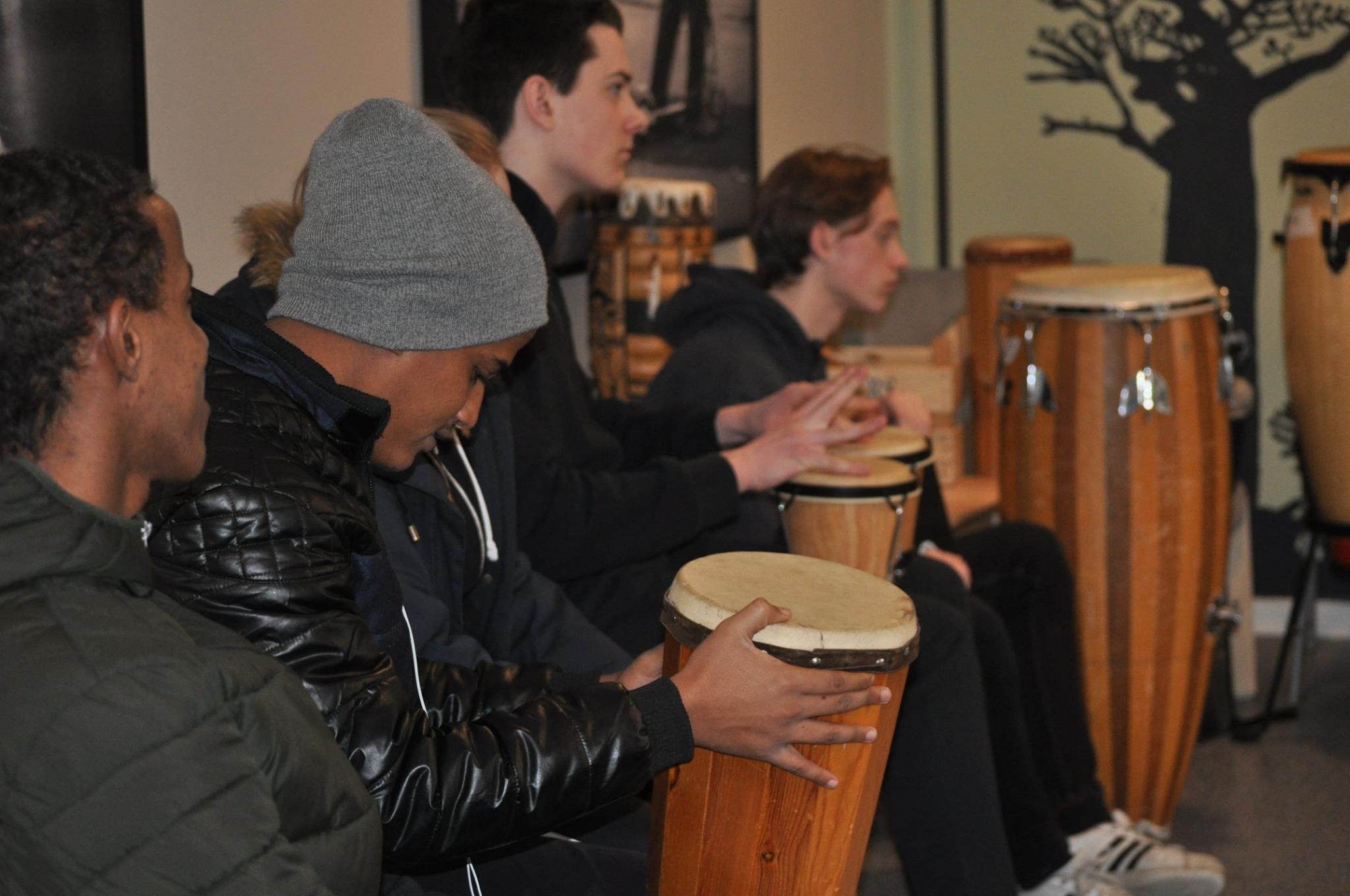
The endless series of questions were not answered, not even asked. This time, we inhabited the space, we moved around, we perceived it and ourselves and each other. Movements, gestures, sound became of high importance in establishing connection.
Sounds, the beat of the drums were able to express a wide range of emotions, feelings, and even could tell simple stories. Owning stories and narratives are the cornerstone of empowerment, self-empowerment and the ability to relate.

This workshop was offered within the framework of a Europe for Citizens programme: You Are Welcome, having 13 partners in 7 countries around Europe.

Participants: unaccompanied refugee minors and students from the Nordsjællands Efterskole.

Time: 7th and 10th March 2018.

Led by: Rita Sebestyen

Lead organizer from Gribskov: Lisbeth Eckhardt-Hansen

Assistant: Marin Hermanssdottir

Othernessproject, Gribskov Center – Red Cross, Nordsjællands Efterskole, You Are Welcome, Europe for Citizens.

Categories
uncategorized workshops

cluj 2014

mOtherness

In cooperation with: GroundFloor Group and Játéktér/Playing Area

Paintbruch Factory

26-27 October 2014 

A two-day workshop was divided into three parts: one part consisted of movement exercises, meant to experience both the working of a community and the non-verbal elements related to the theme.

The designers and coaches of the movement elements were the actor Ferenc Sinkó and Ildikó Ungvári Zrínyi, university professor the Tg-Mures University of Arts.

The second part included the evocation of personal stories about birth and their discussion moderated by Kinga Boros, assistant lecturer at the Tg-Mures University of Arts.

The third part of the workshop was a performance lecture constructed on a text by Slavoj Zizek, by Attila Szigeti, lecturer at the Faculty of Philosophy of Babes-Bolyai University. Imre Ungvári Zrínyi, lecturer at the Faculty of Philosophy of Babes-Bolyai University moderated and summarized reflections on the event. Sándor Sajó, lecturer at the Faculty of Aesthetics of ELTE, Budapest reported about his participation at the IETM meeting in Sofia, where he represented the project. Rita Sebestyén from Babes-Bolyai University and Anikó Varga, editor-in-chief of Playing Area, moderated the discussion about  possibilities of cooperation with institutions.


Categories
uncategorized workshops

cluj & cardiff 2014

Gogol in Cluj/Cardiff

Three days of workshop, symposium, two special blocks for young researchers and also two performances were comprised into the Gogol in Cluj/Cardiff event between 21-23 March. The first international, practice-based research oriented event of the Representations of the Other project has come to life as an interwoven endeavour of the Gogol InterPlayground project – a rhizomatic, world-wide growing network that encourages the use of drama as a tool for social transformation –, the GroundFloor Group from Cluj (Romania), producer of cutting-edge performances in the Paintbrush Factory, this latter serving as a venue for this event as well. Organization and professional support was also assumed by editors and contributors to the Játéktér/Playing Area theatre periodical.