Categories
projects uncategorized

diaspora women

Summary:

The term diaspora women refers to women who have migrated or are descendants of those who have migrated from their country of origin to a different host country.

They often navigate complex intersections of identity, encompassing their cultural heritage, gender roles, and experiences as migrants or members of diaspora communities.

The goal of this project is to create a supportive environment that honours their rich cultural backgrounds while promoting financial and cultural empowerment, equality, and a sense of belonging in their adopted countries.

Our Mission:

In the tapestry of our diverse society, diaspora women stand as vibrant threads weaving stories of resilience, creativity, and strength. Our mission is to illuminate and amplify these voices, creating a dynamic cultural, social and economic space that celebrates the rich intersectionality of diaspora experiences among women.

Our Vision:

A world where diaspora women are recognised as pillars of strength, where their stories, cultures, and talents are not only acknowledged but embraced as essential threads in the fabric of our shared humanity.

Our Values:

  1. Intersectional Empowerment:

Acknowledge and empower diaspora women at the crossings of gender, culture, and migration, recognising the unique strengths that arise from these intersections. Advancing intersectional empowerment through financial and cultural inclusion and fostering entrepreneurial spirit to reach agency and independency.

2. Cultural Appreciation:

Encourage appreciation and understanding of diverse cultures, languages, and traditions. Fostering an environment of mutual respect and collaboration.

3. Inclusivity in Leadership:

Promote and support diaspora women in leadership roles across various sectors, ensuring their voices contribute to shaping policies, institutions, and cultural narratives.

4. Global Solidarity:

Foster connections and collaborations with diaspora women globally, recognising the universal aspects of their experiences and leveraging collective strength for positive change.

Join us in the celebration of diaspora women — where diversity is not just acknowledged but celebrated, and where the collective strength of these women becomes a source of inspiration and empowerment for generations to come.

For our SDGs: click here.

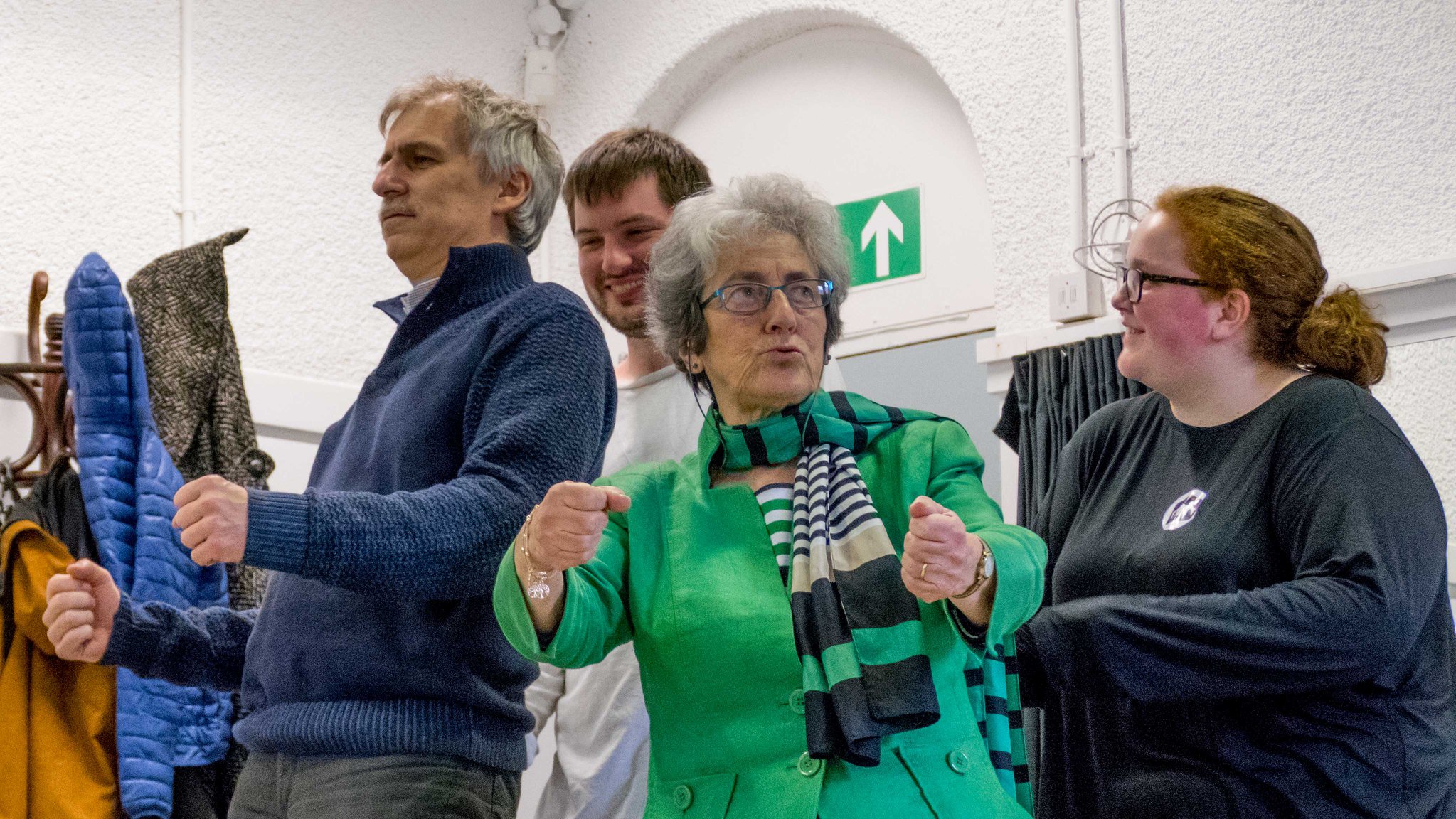
Photo by Luwadlin Bosman
Categories
about uncategorized

about

At Otherness Project, we embark on a transformative journey that transcends borders and disciplines, seamlessly blending art, science, and society.

Our mission is to design sub-projects to deliver high-quality performances, workshops, and research initiatives that not only captivate audiences but also serve as catalysts for education, individual growth, and social healing.

We are dedicated to pushing boundaries, challenging norms, and creating experiences that resonate with the complexity of our interconnected world. We believe in the transformative power of art to bridge gaps, foster understanding, and ignite the spark of curiosity that fuels both individual growth and societal progress.

We cooperate in various artistic and research environments internationally. Our partners reside in Denmark, Sweden, Germany, Greece, Cyprus, Italy, Slovenia, Hungary, Romania, the UK, Montenegro, and the spectrum is getting larger every year.

Join us on this global exploration where art becomes a powerful force for change, education becomes a journey of discovery, and society is enriched through the diverse narratives we weave together.

CONTACT: othernessproject@gmail.com

OR:

Go back

Your message has been sent

Warning
Warning
Warning
Warning.

OUR STORY:

Otherness Project was initiated as a third sector organisation in Helsingør, Denmark, in 2014, with a core group of artists and researchers residing in Eastern European and Nordic countries.

In Denmark, between 2014 and 2019, Otherness Project:

  • participated in 11 EU projects,
  • developed and disseminated among 8 partners organisations the social research-based Sideways Storytelling method,
  • developed 4 participatory performances with/for/by local audiences, using relational art, dialogical art, performing arts, installation art, gamification, art-and-science methods,
  • raised 2 million EUR for its sub-projects,
  • delegated 15 young professionals to participate pan-European exchange and training programmes,
  • was endorsed by the Danish Ministry of Culture for its excellence in socially engaged arts projects.

In the UK, between 2019 and 2023, Otherness Project continued its work as a grassroots organisation with global team members from the UK, Scotland, China, Italy, the US, Hungary, Romania, the Check Republic, and Colombia.

  • initiated a global object-storytelling project during the pandemic,
  • created a trilingual hybrid performance tackling both gender equity and the role of AI in human life,
  • was endorsed by the National Centre for Writing and the International PEN,
  • created a platform for intersectional voices,
  • has become a member of the prestigious publib directory: https://www.publib.co.uk/othernessproject.

An example of one of our gamified action-research performances is ‘IF’, which took part in several international artistic and research events and platforms, its methodology was published by De Gruyere and was represented in the volume Global Perspectives on Youth Art Programs, by Bristol University Press.

Our installation-performance, IF, developed with the action research methodology, invited to several festivals across Europe: Bådteatret, CPH / Actor Training in a Globalised World, CPH /Altofest, Naples (IT) / International Time Perspective Conference, Nantes (FR) / Passage Festival, Helsingor-Helsingborg (DK-SE) / Bridges Festival, Cluj-Napoca (RO) / Rahvusvahekine A-Festival (ET).

TEAM in DENMARK (2014-2019)

artistic director: Rita Sebestyen (RO/HU/DK/UK)

performer: Minni Katina Mertens (NO/DK)

performer: Sara Vilardo (IT/BE/DK)

light- and sound designer: Ivan Wahren (SE)

EU-project manager: Stine Ebbesen (DK)

dramaturge: Mira Nadina Mertens (NO/DK)

social media editor: Nora Ugron (RO/FI)

Categories
art uncategorized

Letter to a Clone Manufacturer

BY GIGI GUIZADO.

Link to the event: click here.

The event on the 25th September 2021 was part of the official selection of the International Translation Day by the English PEN and the National Centre for Writing.

Conception: Rita Sebestyen and Gigi Guizado.

This is a short and semantically multi-layered play which tackles gender and power-issues in a situation set on the verge of the post Anthropocene world. In spite of the grim topic, the irony and the possible plot-twists will save us from immersing ourselves into dystopia.

The intrinsic complexity of the piece does not stop at simply tackling the stereotypes of our societies, but also mischievously plays with the possibilities of swapping roles, until the very end. The last couple of seconds are left open to the readers’/spectators’ interpretation as well.

We found it especially intriguing to have the piece translated from English into Hungarian and see how different cultures, languages, conceptions, ages, genders will affect this endless game of fascinatingly diverse interpretations.

Just a couple of questions that occurred during the English and Hungarian rehearsed readings and open discussions at the event:

  • What circumstances lead to de-humanisation?
  • How objectification reflects back on the perpetrator?
  • How our intelligence and emotional intelligence is shaped by our circumstances?
  • How AI might translate, interpret and react to our languages and feelings?
  • Will the present status quo be challenged at a certain point in the future? How? By whom?

For a full-rounded cultural and linguistic experience, we kindly advise you to watch both the Hungarian and English versions, and taste the exquisite palette of the re-framing and interpretation of the artists.

We are all looking forward to reserching further approaches, re-readings, interpretations, translations and designs of this piece.

Cast performing in English:

Daniela Cristo Mantilla and Angel Mendoza

Cast performing in Hungarian:

Éva Bandor and Ádám Tompa

Translation by: Rita Sebestyén.

Carta a un Fabricante de Clones

Following the positive responses of our International Translation Day event, also the manifold possible interpretations of the text, we managed to arrange a second event, where further gender, age, culture and language-related nuances came to the forefront.

This time we discussed how non-binary cast might affect the language and the socio-cultural representation and interpretation of the same text.

Spanish is a gendered language – along with many other Romance Languages -, where substantives and pronouns have defined binary expressions for centuries. As opposed to the English gender-neutral pronoun ‘they’, which is already existent in the language, in Spanish the ending X, with its different pronunciations, are new addenda to the common language and its use requires constant attention from the part of the speaker or writer.

We also observed how changing certain aspects and angles of the interpretation, such as cultural background, language, gender, age will always lead to certain dichotomies and power-unbalances. However, approaching the text, the situation and the characters from a more generic, non-hierarchal and de-colonial point of view, we see how any kind of othering leads to a new power-struggle, leading to a multiplication of the colonial structure. A new, all-encompassing socio-cultural structure would be needed to reframe these dichotomies into eye-level dialogues.

Cast performing in Spanish:

Adriana Chavez (she/her/they/them) and Cinthia Lilen (they/she)


Translation by: Gigi Guizado.

Categories
uncategorized workshops

woolwich 2019

Otherness Dialogues Workshop for the EU project: Open European Societies.

logo
Main partner and organiser

Throughout this workshop we will explore our memories and/or imagination of what we could call a safe space, and take different positions related to it. We will use description, storytelling and some performative elements to experience diverse points of views. Roles, languages and characters we choose will express these positions, which will interact during the proposed games. The methods are based on creative writing and personal storytelling methodologies, stemming from object-, character- and space-related narrative structures.

Photo by Olga Yocheva

Questions:

  • How can we meet in a short time, in an easily accessible way with people speaking different languages, having different cultural background?
  • How can we give voice and empower participants through storytelling to express their individual, personal feelings, while understanding their own cultural, historical, social, economic, linguistic background?
  • How can we create positive, reinforcing discourses together?
  • How can we raise empathy and foster social inclusion through metaphoric-artistic language?

Key notions:

Observing. Space, time, exercises are conceived to allow perception, observation, reflection and self-reflection.

Boundaries. Storytelling uses the sideways technique, never enters spheres of privacy or trauma. The personal stories are related to the participants’ lives in a way that they are in control of their boundaries. 

Metaphor. The workshops often employ the simple and effective use of metaphor as a vehicle between semantics and imagination, which helps the participants express themselves in an artistic framework to protect their privacy and foster their creativity.

Empowerment. Storytelling fosters expression and (re)formulation of own, hybrid, fluid, hyphenated identity, without retraumatizing or labelling.

Main aims:

  • To inspire storytelling through recollecting quotidian events.
  • To help the participants reflect on and retell their life events.
  • To enhance observation and co-creation.
  • To foster empathy.
Categories
research uncategorized

otherness and the performing arts

The Centre for Studies in Otherness is a collaborative project between scholars primarily from the University of Aarhus, Denmark and Mary Immaculate College, Limerick, Ireland.

‘Otherness: Essays & Studies’ seeks to publish research articles from and across different academic disciplines that examine, in as many ways as possible, the concepts of otherness and alterity. As such, the journal now offers an outlet for the dissemination of such research into otherness and aim to provide an open and active forum for academic discussion. For further information on the journal, please contact the editors at otherness.research@gmail.com.

The new, special issue of the journal tackles with Otherness and the performing arts, some of the contributors being members and co-creators of othernessproject.

Otherness and the Performing Arts

Contributors: Adam Czirak, David Schwartz, Azadeh Sharifi, Emily Hunka, Marco Galea, Oroszlán Anikó, Marie Bennett, Eszter Horváth

Edited by Rita Sebestyén and Matthias Stephan

Introduction

Re/shaping Otherness is the focus of the current, special issue that explores performative and theatrical representations of Otherness. Within the spaces of theatre and the performing arts, the differential bounds demarcating otherness, such as national, cultural, religious, socio-political, sexual, gender, and diasporic delineations, are continually and constantly dramatized, disrupted, negotiated, and redrawn.

In light of the heated debates on globalization and multiculturalism in recent years, new, heterogeneous inter- and cross-cultural approaches to fluid, migrant, hybrid, transcultural worlds have emerged. In this respect, the question of Otherness is vital to the quests that arise as a result of their emergence: How do we approach these new intersubjective and dialogical perspectives of identity-seeking, self-definition, indeed, community cohesion in such a milieu? In a world increasingly global yet local, uniform yet diversified, how do these perspectives complicate relations to and understandings of others and Otherness? How is the relationship between dominant and peripheral cultures, self and other, reflexively re-negotiated? In the following articles we will consider a surprisingly vast array of topics: most recurrent being embodiment, representation, participation, différance, act and reflection, and also methods of approach: ranging from theoretical analysis to essay-manifesto and performance-as-research methodology. This open and loosely waved narrative, offering philosophical, socio-cultural and artistic insights, also induces a series of quests related to Performing Arts being challenged with regards to its genre, role, socio-cultural-political involvement and responsivity/responsibility.

The exchange of gazes is the pivotal question of Ádám Czirák’s study: Becoming Someone Else. Experiences of Seeing and Being Seen in Contemporary Theatre and Performance.His study deals with the production trend based on the mutual visualization of the participants that inevitably induces a process of subjectification, in which looking at someone else is accompanied by being looked at. The relation of a new Self and the Other is embedded in these performances that transform the classical subject-object duality into a contingent subject-subject relation. Through examining, from this point of view, performance by Franco B., She She Pop and Dries Verhoeven, Czirák pints to the importance of fashioning new guidelines of a performance analysis approach, and the genre becoming crucial to consider political questions of representation.

Stemming from and leading to direct socio-political considerations, namely the refugees’ situation in a relatively tangential country like Romania –  and one case in Tajikistan — thenext article raises all the questions of displacement, socio-cultural otherness, cultural geography and of representation. Based on his own research, creative processes and performances, and subsequently even the audience’s feedback, David Schwartz, artist and activist outlines a double narrative in his article: Born to Run. Political Theatre Supporting the Struggles of the Refugees; a personal, local, historical, political, cultural description of the refugees’ struggles, and the artistic and human experience of the artists and refugees taking part in the creative practice. The article offers the broadest possible horizon of performance as research: hermeneutical-descriptive methods, interwoven with socio-political considerations and a reflective gaze on his own work, leading ultimately to a complex yet by its descriptive aspect easily approachable social-artistic action research. Born in the Wrong Place as performance, Migration Stories as performance, followed by debates and the involvement of the refugees and their opinions brings up crucial questions of ‘foreignness’, prejudice and ethical questions of self-representations.

Likewise, migration and refugees’ social integration are the topics of the article by Azadeh Sharifi: Mentality X – Jugendtheaterbüro Berlin and its theatrical space for Urban youth of Color, this time shedding light on a phenomenon that both socially and artistically indicates a further step on the matter in question: post-migrant theatre. The term itself being recently coined by researchers, it expresses a phenomenon of self-empowerment, self-representation of the second generation migrant communities, who, through often cross-genre artistic forms of the performing arts and hip-hop, take in their hands the discourse on their own precariousness and transit-state in the German society, deconstruct racist narratives and occupy physical, artistic and aesthetic space through their manifestos and actions. Through festivals, own narratives and aesthetics created by Mentality X, they inevitably push critical reflection, social awareness into discourses that regard them as artistically-socially-politically decisive factors.

Roughly speaking, a manifesto can be regarded as a plan of and call for action projected into the future, often related to (and challenging) socio-political and artistic environments. By putting forward a new aesthetics, method, discourse, community, and a new artistic view that have been marginalized before, Emily Hunka, the author of the next article entitled Method in our madness: Seeking a theatre for the psychically disabled other merges the descriptive methods of existing phenomena and the cast-in-the-future gesture of the manifesto. She raises her voice for discovering the possibility of a theatre that can provide the psychically disabled young people with a space that turns the margins into a comfortable place to live and create. Operating with the significance of ‘social capital’ and ‘human capital’, also giving abundant examples from Shakespeare to Nietzsche, Kierkegaard, Schopenhauer, and the power of the creation that through the limbic resonance of the artist reframes the socially viewed oddity into works of art, Hunka provides both scientific and aesthetic considerations and challenges the socially restrictive frame of the atypical emotion/behaviour.

A historically, socio-politically and culturally representative, post-colonialist issue is addressed by Marco Galea in The Pantomime Other: Building Fences in Pantomime Performance in Malta. Starting from a historical event, more than 200 years ago, a blockade that lasted 18 months in Malta, Galea unfolds a complex network of social and cultural colonization, a hidden and many-faceted othering endured by the Maltese, condensed in one theatrical metaphor: “black skin, white masks”. Maltese and British amateur and professional theatres and their traditions – e.g. the apparently innocent action of writing a pantomime – become dangerous and harmful instruments of colonial control; the anglicized Maltese still being present in the cultural landscape of Malta: the speaking subject that describes the rest of the population as the Other, the different, the subaltern.

As opposed to the colonized representation of the Maltese in the former article, a witty, almost cunning self-representation and self-empowerment emerges from the article of Anikó Oroszlán: “Mute Hieroglyphics”: Representing Femininity in the Early Stuart Court Masques, dealing with early English actresses in the 16th and 17th centuries. Oroszlán draws our attention to the radical dichotomy between the fact that, on the one hand, the women who performed in those times were regarded as corrupt and amoral, and on the other hand, even the reigning queen was able to show herself in public, like an ‘actress’. Through civic pageants, guild plays and royal processions, posing the questions of professional and amateur theatre artists, the social status of the performers and the influence of another culture – in this particular case the Italian touring companies, the article focuses on the emergence of the body of the queen, representing royalty, but on the other hand, inevitably, the controversially regarded female performer, while tackling at the same time the metamorphoses thematized in the masques of Ben Jonson’s plays.

Theatre as a place where physicality is (also) displayed, being an emblematic metaphor of mutability and the ephemeral, is contrapuntal, yet represented in films that deal with and reveal different strata and approaches of Mozart’s otherness – closely related to the socio-cultural frame of his contemporary Vienna. Marie Bennett scrutinizes in Representing Mozart’s ‘Otherness’ in Film Mozart’s social otherness, such as  his incapability to relate, while several accounts portray him as a social prodigy, as well. A predilection to the use of Turkish music as mystic, oriental Otherness, and also Otherness of nationality and class are closely examined in the films Wuthering Heights (1939), The Truman Show (1998), The Heart is a Lonely Hunter (1968), and Kind Hearts and Coronets (1949), in strong interdependence with the dramaturgy of the music used in them, is examined in this paper on Mozart’s Otherness.

Eszter Horváth’s The Other and its Double closes this special issue, dealing with questions of Otherness and bodily representation, starting from Rimbaud’s metaphor: ‘I is another’. Like in most of the previously mentioned articles, questions of corporeality, representation, discourse creation and emergence come up as main topics. In this last article the theoretical, mostly phenomenological approach of Otherness in performing arts summarizes and encapsulates most theories that the issue tackles: repetition, re-presentation, difference (Deleuze); human bodies being socially constructed (Butler), reconsiderations of corporeality in the discourse of the Other, as well as the actor seen as a conscious body, acting upon its constitutive differences.

Rita Sebestyén

Download entire issue here:

otherness and the performing arts

Categories
uncategorized workshops

cluj 2014

mOtherness

In cooperation with: GroundFloor Group and Játéktér/Playing Area

Paintbruch Factory

26-27 October 2014 

A two-day workshop was divided into three parts: one part consisted of movement exercises, meant to experience both the working of a community and the non-verbal elements related to the theme.

The designers and coaches of the movement elements were the actor Ferenc Sinkó and Ildikó Ungvári Zrínyi, university professor the Tg-Mures University of Arts.

The second part included the evocation of personal stories about birth and their discussion moderated by Kinga Boros, assistant lecturer at the Tg-Mures University of Arts.

The third part of the workshop was a performance lecture constructed on a text by Slavoj Zizek, by Attila Szigeti, lecturer at the Faculty of Philosophy of Babes-Bolyai University. Imre Ungvári Zrínyi, lecturer at the Faculty of Philosophy of Babes-Bolyai University moderated and summarized reflections on the event. Sándor Sajó, lecturer at the Faculty of Aesthetics of ELTE, Budapest reported about his participation at the IETM meeting in Sofia, where he represented the project. Rita Sebestyén from Babes-Bolyai University and Anikó Varga, editor-in-chief of Playing Area, moderated the discussion about  possibilities of cooperation with institutions.


Categories
uncategorized workshops

cluj & cardiff 2014

Gogol in Cluj/Cardiff

Three days of workshop, symposium, two special blocks for young researchers and also two performances were comprised into the Gogol in Cluj/Cardiff event between 21-23 March. The first international, practice-based research oriented event of the Representations of the Other project has come to life as an interwoven endeavour of the Gogol InterPlayground project – a rhizomatic, world-wide growing network that encourages the use of drama as a tool for social transformation –, the GroundFloor Group from Cluj (Romania), producer of cutting-edge performances in the Paintbrush Factory, this latter serving as a venue for this event as well. Organization and professional support was also assumed by editors and contributors to the Játéktér/Playing Area theatre periodical.