I have carried a tile with me, a little bigger than the size of my palm. It had been blank before I lined some cobalt, vermillion, ocher or realgar, and emerald to make it a work of art. It seems to me one of the best from kids’ arts. For the hues I happened to choose for it are as classic as those favored by masters of Chinese watercolors, and the lines are as simple and neat as some of landscape drafts from Rembrandt.
I have carried it with me from my urban origin to New Zealand where I spent one and a half year, and finally took it back to the inland Elysium, Chengdu, where I choose to work. So many other objects come and go in my life hustle. They usually are lost in hectic shippings or broken by use and abuse. No small surprise when I was cued by the fact that my little piece of tile art had survived the metabolism of my belongings, of objects.
How did I make it?
Schools bid the urban young “go mingle with peasants, go experience rural area”. So they make secondary school students in the city go through this education session, that is to get educated by the rural, of around two weeks. I went through the session when I was 14, and it taught me to make rural art. At first the instructor had laid out the procedure of making tile art, we, a bunch of rats who had no idea of drawing anything, were commanded to craft our own version of the artistic design. Easy work: I just copied the pattern on the china pen baskets in the studio. The ancient pattern was transformed into nineteen heads of auspicious clouds floating and taking up two thirds of the tile square. Then I curtailed the pattern into a dozen skewed strikes and stacked them to symbolize a boulder, where a branching pine grows out of it. Yellow or brown for boulder, red for clouds, blue for pine trunk, green for pine needles. The rest was as milk white as the tile itself. Out of the furnace that gave the tile lasting sheen from glaze was this art of mine.
This was how I crafted my Ph.D thesis later. It turned out copying and transforming, with a bit of imagination and brush style.
Everything has been growing out of the flow and structure I gave for this little tile.
Περίμενε υπομονετικά. Με ολόσωστες πλευρές και άκρες κολλημένες με πολύ καλής ποιότητας χαρτοταινία. Πάνω του κολλήθηκε και ένα γράμμα με τα στοιχεία μου και τα στοιχεία του. Ένα αρχείο που επικυρώνει την σχέση μου μαζί του.
Όνομα
Τηλέφωνο
Διεύθυνση αποστολής
Διεύθυνση παραλαβής
Περιεχόμενο
Αξία
Ημερομηνία
//
Waiting patiently. With all its sides and edges glued with very good quality paper tape. A letter with my personal info and its details was affixed to it. A file that validates my relationship with it.
A single hotel room while the guest is away. His room is surprisingly tidy. Dusting the wardrobe I observe how his good quality clothes were folded and organized in a perfect way. I sense a very familiar, good vibe. Then there is a drawing on the desk. It was drawn with the pen provided by the hotel on a small piece of paper taken from the noteholder. It is a tree with a disproportionately big fruit on it, an almost heart shaped strawberry. I immediately know that I saw this before somewhere. I recognize every line, every detail of it.
Have I drawn this myself before? Or will I draw it in the future? What if years later I will come back as a guest to this hotel and I will doodle this while talking on the phone? If it’s me, will I remember this moment of finding it? Why would I avoid meeting myself? I would probably think that leaving this sketch on the desk is a sufficient gesture to remind myself about the illusion of time.
Am 42 de ani și deja nu mai romanțez ideea de a avea un jurnal, nici conținutul acestuia.
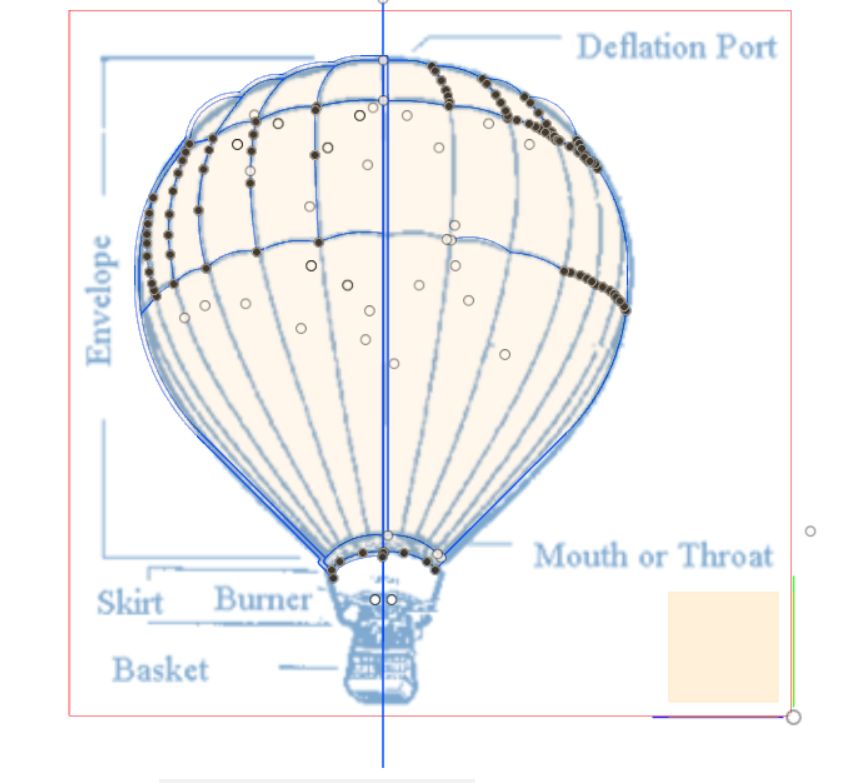
Deci, pot deține în acest scop un caiețel fabulos, de culoare vișinie, cu pagini gălbui și copertă ca de poveste, reprezentând un erudit sau un magician cu niște ochelari drăguți, o pălărie foarte înaltă, cu o carte imensă în față, pe care își odihnește mâinile aproape ireale, cu degete lungi-lungi. Stă într-un balon cu aer cald care se ridică sau coboară.
Așa a fost să fie jurnalul meu, exact ca în cazul acelor relații pe alocuri neplăcute din majoritatea romanelor pe care le citeam noi, fetele tinere, cu scopul de a însuși corespunzător știința de a îmbrățișa pe deplin viitoarele noastre catastrofe, de a ne azvârli în ele..
Doar că acum știu și secretul păstrării unei cantități mari de secrete și în caz că cineva ar găsi obiectul, acest veritabil corpus delicti: un scris de mână incredibil, foarte aproape de o hidoșenie științifică. Ca de doctor, aș zice dacă aș dori să-mi romanțez rușinea.
Oricum, adevărul este că realmente îmi place gândul unui jurnal cu o copertă eterică, având un conținut surprinzător, dar și dezolant, în anumite aspecte – frumusețe idealizată și urâțenie realistă, umăr la umăr.
I’m 42 and I’m not romanticizing anymore the idea of having a diary, neither its contents.
So, now I can have an amazing claret booklet for that purpose with yellowish pages and a fairytale-like drawing on its cover representing a scholar or a magician with very pretty eyeglasses, an immensely tall hat and a huge book on which he rests his almost unreal hands with long, long fingers. He is sitting in an ascending or descending hot-air balloon.
It was simply meant to be, just like all those nasty relationships in most of the novels we’ve read as young girls, with the purpose of assimilating properly the knowledge of how to fully engage in and embrace future catastrophes…
But now also know the secret of keeping a great deal of secrets even if somebody might find the object, the corpus delicti: having an unimaginably, almost scientifically awful handwriting. As doctors do, I could say if I would want to romanticise disgrace.
Despite all that, the truth is that I simply like the idea of a diary with an ethereal cover having a totally surprising and somewhat desolating content – idealistic beauty and realistic ugliness, side by side.
n. pl. (anatomy) A sharp tip of any part of the anatomy; a point or other smaller area.
a concept from Roland Barthes’ book Camera Lucida: Reflections on Photography:
to wound;
denoting the wounding, personally touching detail which establishes a direct relationship with the object or person within it.
“Punctum has a power of expansion. Here, the photograph really transcends itself, is this not the sole proof of its art?” (Barthes R., Camera Lucida, p.50)
Picture A All about my grandpa: Punctum from Wuhan. 关于我爷爷的一切:武汉的刺点。 Object/component: herbs—honeysuckle, rose, hawthorn; incense. 材料组成:草药—金银花,玫瑰,山楂;檀香
The herbs are: honeysuckle, rose, hawthorn. I used a sewing needle to make a string for these materials and pierce into the first map, to symbolise the Punctum from my childhood memory and from my hometown Wuhan.
Honeysuckle is often used as medicine and tea, to cure bacterial infections, to counteract poisoning and to kill germs.
Rose is used mainly for making tea and claimed to offer numerous health benefits such as boosting the metabolism, helping relieve pain during periods and helping in the treatment of anxiety and diabetes.
Hawthorn is used as medicine. It’s good for balancing heart rhythm disorder and used for digestive disorders by breaking down fats.
About the culture and mysterious effect of herbs I learnt from my grandfather. He was a herbal researcher, a kung-fu practicer and a healer. He helped hundreds of people using herbal therapy, QiGong exercise, and also by his impressive speech about Chinese classical philosophy. He worked as a headmaster of a local school, and he went to mountains every year to meditate on spiritualism. I have tried herbal therapy some years ago in order to build up my body strength and it was like drinking special soup everyday. I didn’t adhere to it, simply because the flavor is too bitter for me.
Meine japanische endgeblasene Bambusflöte trage ich überall mit mir hin. Das Holz ist hell und das Utaguchi (blasendes Ende) ist schräg nach außen geschnitten, und am Rand wird ein kleines Stück Elfenbein (Kinko-Schule) eingefügt, so dass subtile Tonvarianten erzeugt werden können. Die Glocke (ausgestelltes Ende) besteht aus dem Stamm der Bambuspflanze mit ihren Wurzelenden.
Ich habe ziemlich lange gesucht bis ich „meine“ Flöte gefunden habe. Sie ist nicht besonders schön, hat viele Kratzer und Abnutzungsspuren aber hat mir auf Anhieb Töne geschenkt. Sie kommt aus einem japanischen Kloster und ermöglicht mir täglich mein Suizen zu praktizieren. Somit ist diese Flöte für mich nicht unbedingt ein Musikinstrument sondern ein Mittel um mein seelisches Gleichgewicht zu wahren.
I carry my Japanese end-blown bamboo flute with me everywhere. The wood is light and the Utaguchi (blowing end) is cut diagonally outwards, and a small piece of ivory (Kinko school) is inserted on the edge, so that subtle tone variations can be created. The bell (flared end) consists of the stem of the bamboo plant with its root ends.
I searched a long time until I found my flute. It is not particularly beautiful and has some scratches and signs of wear. The flute found its way to me from a Japanese monastery. I can’t yet play it very well, but I perform suizen breathing exercises daily that calm and ground me. So the flute is not so much a musical instrument for me, but rather a mean to maintain my mental balance.
If the light falls on the surface at a certain angle, it can be reflected from the upper level and, after refraction, from the lower level, too.
This way, double and multiple images can be created.
A Blondel mirror I took from my grandma. It is a full figure mirror, around 120 years old, and has never been repaired. It literally sits now with my daughter and I at the table, in the dining room. The frame is carved out of incredibly lightweight wood, guilt and painted with some brass-like tint. The painting is getting a patina, and it covers the wooden handwork perfectly; it still looks like it was made of copper of brass or bronze. Its back is also wooden: dried, shrunk, maybe even a bit rotten. There is a cut-glass margin which skews, distorts and sometimes duplicates the images of the objects in it. The silver of the mirror is perfectly intact.
When I met the mirror, it was sitting between the two large windows of my grandma’s bedroom. It was surrounded by minimalistic, sombre, black solid furniture, with a nightstand below, which was full of old-style perfumes, more or less rancid lipsticks, creams and talc. Behind it, the windows opened to an unusually big, wild and chaotic bed of lilies of the valley. Their smell would get into the room during the sunset airings. It lived through my grandma putting her lipstick on with a disgusted grim on her face, me dancing in front of it a couple of minutes later and more than thirty years ago. I smuggled it out of my grandma’s house while she was lying far away on her dying bed. ‘You can take the mirror now’ she said unexpectedly gracefully and surrealistically certain about what was happening behind her back. It was taken across four countries, covered in nasty newspapers and grease-smelling ropes to not attract attention.
A couple of days ago, after a careful consideration, sitting in front of it, I ticked the boxes: ‘any other mixed background’ for my ethnicity and something vague like ‘any other gender’ in an official paper.
We observe our everyday objects. The way we relate to them.
What do we see if we take a closer look at them? What do we know about their composition and material? What is their structure? How do they function? What are we using them for? What do we know about their stories?
On this platform we collect object-stories.
How does it work?
If you want to develop your object-story with us, send an idea: a picture and/or 2-3 sentences. We will get back to your within one week, ask questions from our perspective and we will develop your story together.
2. If you want to send a completed object-story, go ahead!
In both cases, we will get back to you and decide on sharing your object-story together.
We reserve the right to not publish material that is harmful to any community or individual.
We are happy to answer your question and discuss your suggestions.
Initiators
Ildikó, science (RO/DE).
李璇 Li Hsuan, visuals (CN/UK).
Rita, conception and narratives (RO/HU/DK/UK).
These are the formats on which we can share object-stories:
Language. We are happy to share bi-lingual stories. At the moment, you can communicate with us in English, German, Chinese, Hungarian and Romanian. You can send your object-stories on any of these languages, and please be mindful of the fact that you still have to provide and appropriate English translation, too, as we use English as a lingua franca.
Medium.Choose from any of these possibilities:
Three visuals (photos, drawings, paintings, diagrams, etc.): no smaller than 1MB and no larger than 5MB, jpeg format, high resolution (minimum 72 dpi, ideally 300dpi).
One text of max 1000n (meaning: 1000 characters including spaces): doc or docx extension.
One soundscape of max 60 sec: mp3 extension.
One video of max 120 sec: mp4, m4v, webm, ogv, wmv and flv; alternatively, you can upload the video on youtube with password, and send the link and the password, too.
You can send material on one object. Choose maximum two of the above-mentioned media to describe the object, respecting the given extensions and resolutions.
Copyright
We accept only original work of yours, and we edit them respectfully with you in agreement.
The platform displays the object-stories and has the right to share them and use them for artistic and scientific research, in which case we will inform you.
As author, you are liable to clear any copyright issues that might come up regarding your object-story. If you want to share your object-story with any other platforms you need to notice us first and mention this project as resource.
Send your object-stories and ideas to: othernessproject@gmail.com
YOU ARE WELCOME is a Europe for Citizens project (Networks of Towns) which arose from the recognition of the risks posed by the rise of xenophobia, intolerance and discrimination in Europe. The project brings together eleven partners from eight countries in Europe committed to supporting migrant and refugee integration, community development and promoting evidence–based policymaking in the area of migration. The project’s aim is to deconstruct the process of the stigmatisation of migrants, help communities involved overcome stereotypes and develop counter narratives for more accurate perceptions of migrants and refugees in the participating countries.
This guidebook summarises the more than two-year long work of the international partners:
The project «YOU ARE WELCOME: European Network for Integration of Refugees at Local Level and Combating Hate Speech» was funded with the support of the European Union under the Programme
“Europe for Citizens”Applicable to the Strand 2 – Measure 2.2 “Networks of Towns”
Four events have been carried out within this project:
Event 1
Participation: The event involved 122 citizens, including 84 participants from Dresden (Germany), 10 participants from Prague (Czech Republic), 4 participants from Helsingor (Denmark), 15 participants from Thessaloniki (Greece), 2 participants from Budapest (Hungary), 1 participant from Kriva Palanka (Northern Macedonia), 2 participants from Bratislava (Slovakia) and 4 participants from Oldham (United Kingdom).
Location / Dates: The event took place in Dresden, Germany, from 7/04/2017-10/04/2017.
Short description: The aim of the event was to bring for the first time all the representatives of all partners together and discuss the aims, activities & methods, outputs and expected outcomes of the project as well as to invite citizens from Dresden and third-country nationals and introduce them the project. The activities aimed to encourage native citizens from Dresden, international participants and third-country nationals that live in Dresden to interact with each other culturally and socially in the first public event under the title “Voices & Images of a New Land” at Johannstädter Kulturtreff. The event included the following activities: i) art exhibition “Fragments of Memories” with artworks by artists from Germany, Syria and Bulgaria, ii) concert “Orient meets Occident” -duet of an Ukrainian piano player and a Syrian oud player, iii) screenings of the short films“Voices & Images of a New Land” and“My Right is Your Right” produced byJKPeV, iv) documentary film screening“Dresden Refuge” produced by Europa Transit, v) round-table discussion on migration, stereotypes against refugees and migrants and how to tackle HateSpeech.
Event 2
Participation: The event involved 324 citizens, including 11 participants from Dresden (Germany), 2 participants from Prague (Czech Republic), 2 participants from Helsingor (Denmark), 218 participants from Thessaloniki (Greece), 3 participants from Budapest (Hungary), 81 participants from Kumanovo (NorthernMacedonia), 2 participants from Bratislava (Slovakia) and 5 participants from Oldham (UnitedKingdom).
Location / Dates: The event took place in Thessaloniki, Greece from 24/11/2017 to 27/11/2017 at the Museum of the Roman Forum.
Short description: The aim of the 2nd transnational event was to raise awareness about the YOU ARE WELCOME project and the migration issue. The transnational workshop and lecture “Otherness Dialogue” was facilitated by Dr. Rita Julia Sebestyen from Otherness project. A presentationbytheorganizingpartnerfromThessaloniki,AddArtwasgivenabouttheirlocalart workshop where Greek pupils and refugee children worked with comic artists and in the end, they created their Super Hero illustrated by the Greek comic artists. A study-visit to the refugee centre ARSIS that takes care of unaccompanied minors who are asylum seekers. Activities: i) photo exhibition “Dreaming of a New Life” by the Iranian photographer and film director Morteza Jafari that documented the arrival of refugees and migrants to the Aegean islands, ii) illustration exhibition “Human Right – Human Wrong”, where comic artists and illustrators from Greece displayed their work which reflected the topic of Human Rights, iii) postcard campaign against Hate Speech under the title “Human Right – Human Wrong”, the postcards are illustrated by the same artists of the exhibition and convey Human Rights messages, – the postcards were distributed to all the guests and the guests then were asked to send these postcards to their friends and relatives from their countries in order to achieve a bigger impact, iv) the female vocal group Pleiadesperformed melodies from different regions and countries all over the world about migration, v) screening of the documentary film “School on the Move” – a documentary film about involving refugee children that live in a refugeecampinGreecetobeinvolvedinananimationfilmandlearnaboutanimationfilms,vi) screening of short animation films about Human Rights by TAF (Thessaloniki Animation Festival).
Event 3
Participation: The event involved 230 citizens, including 8 participants from Dresden (Germany), 8 participants from Prague (Czech Republic), 12 participants from Helsingor (Denmark), 8 participants from Thessaloniki (Greece), 133 participants from Budapest (Hungary),8 participant from Kumanovo(NorthernMacedonia),51 participants from Bratislava (Slovakia) and 2 participants from Oldham (UnitedKingdom).
Location / Dates: The event took place at Patyolat in Budapest, Hungary from 23/05/2018to 26/05/2018.
Short description: The aim of the event was to follow up on the current progress of the project and to assess the impact made with regard to the project objectives such as combatting migrant stigmatisation and Hate Speech. During the event the project partners discussed the current sociopolitical situation in Hungary and the state’s migration and integration policies. The Amnesty International Hungary gave a presentation on the current, and past, refugee & migrant situation in Hungary. A study-visit to the Hungarian Helsinki Committee was held, iv) Meeting a refugee from Afghanistan living in Budapest for the last 9 years, v) Lecture on the history of migration in Hungary and its past and present attitudes towards migrants and refugees by by Prof. Michael Miller from the Central European University, vi) Study-visit to Aurora, a social community space, vii) presentation by the refugee organisation Menedék about their work with refugees. The public event took place at Patyolat in Budapest, Hungary (25th of May 2018) which included the following activities: i) short video about a local theatre workshop organized by Glaser Jakab Foundation – the organizer of the public event in Budapest , ii) screening of a short video about theIdomeni Refugee Camp produced by AddArt NGO from Thessaloniki, iii) music concert by Kardos Dani Duo, iv) Mickey Yonas: I’m Angelina Jolie, a physical theatre performance questioning societal ideas and viewpoints by a theatre group from Israel, v) screening of the Hungarian film “TheCitizen”.
Event 4
Participation: The event involved 230 citizens, including 8 participants from Dresden (Germany), 8 participants from Prague (Czech Republic), 12 participants from Helsingor (Denmark), 8 participants from Thessaloniki (Greece), 133 participants from Budapest (Hungary),8 participants from Kumanovo (NorthernMacedonia), 51 participants from Bratislava (Slovakia) and 2 participants from Oldham (UnitedKingdom).
Location / Dates: The event took place in Dresden, Germany from 16/11/2018 to 19/11/2018.
Short description:
The aim of the event was to summarise and evaluate what the project partners have done so far and present the Guidebook which includes information about the migration and integration policies of the project partners, best practices to involve third- country nationals and native citizens through local art workshops and events and the local campaigns against Hate-Speech. The 4th transnational meeting and final event included the “NO HATE Film Festival” at Museum Technische Sammlungen in Dresden, Germany (16- 18 November 2018) which included the following activities: i) choir Dresdner Kneipenchor that sang songs from all over the world and act locally in Dresden, ii) introductory documentary film: “Waiting for the Summer‘s Return” directed by Barbara Lubich, iii) 9 Documentary film screenings which are about conflicts or wars witnessed by 9 different European cities; the documentary films were directed by Xuban Intxausti, v) „Street Stories“ photo exhibition by a Syrian and Palestinian photographer which document the daily life of refugees in 2 refugee camps in Lebanon, vi) Travelling exhibition- “PLEASE OPEN! Crates of Knowledge” which is about the qualities and qualifications that refugees bring with them, vii) WELCOME short film screenings produced by the project partners, vii) 3 workshops: 1) storytelling workshop, 2) Hate-speech online, 3) Zine workshop, viii) Round-table discussion about the rise of populism in Europe and the division between the countries of the EU, ix) Solo dance performance “Mirror” about identity by the Ivorian performer Jean-PaulMehansio.